If you’re reading this with acute lower back pain right now, we know how concerning and frustrating it feels. You’re probably asking yourself questions like: “What should I do if my back hurts right now?”, “How do I know if my acute lower back pain is serious?”, and “Will my back pain get better?” As physiotherapists we see people every week who are worried their back pain means something serious or that they’ll be dealing with it forever. Let me start by addressing your immediate concern and then give you the roadmap to proper recovery.
Immediate Relief: What You Can Do Right Now
When lower back pain strikes, your body is asking for help. Here’s what we recommend doing immediately:
Keep Moving Gently
I know it seems counterintuitive when you’re hurting, but slow, pain-free movements are your friend. The key word here is “pain-free.” We’re not pushing through pain, we’re exploring what your body can comfortably do right now. This is the key to early lower back pain treatment
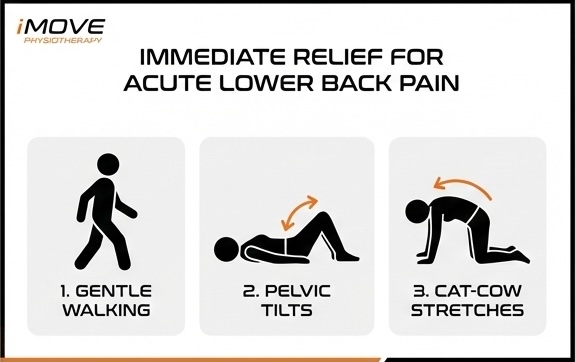
Try these gentle movements:
- Slow walking around your home or office
- Gentle pelvic tilts while lying down
- Knee rocks side to side while lying down
- Cat-cow stretches (only if comfortable)
The goal isn’t to fix everything immediately. It’s to remind your body that movement is safe and to start to give you some acute back pain relief.
Try the Opposite Direction Technique
This is one of the most effective but lesser-known strategies we as part of lower back pain treatment . If your pain gets worse with a certain movement, try moving in the opposite direction.
Here’s what we mean: If bending forward to tie your shoes hurts, lie on your front and do gentle, repeated extension movements (like a gentle cobra pose). Or if standing upright hurts, try some gentle forward/backwards bends while seated.
Start with small movements and gradually increase the range as comfort allows. This approach often provides surprisingly quick relief because you’re moving away from the irritated position.
Use Heat or Ice Therapy
There’s no universal rule here. Some people find heat soothing, others prefer ice. Trust what your body tells you:
- Heat (hot water bottle, heat pack) for 15-20 minutes can help relax tight muscles
- Ice (wrapped in a towel) for 10-15 minutes can help reduce inflammation
Neither is “wrong.” Use whatever brings you comfort in the early stages.
Seek Professional Help Early
Many people wait weeks or months before seeing a physiotherapist for back pain, thinking their lower back pain will just resolve on its own. While some back pain does settle naturally, getting professional guidance early significantly reduces recovery time and prevents the development of chronic issues.
As a physio, when you come to see us, we can properly assess what’s happening, identify the triggers, and give you a personalised plan to pain-free movement. This prevents you from unknowingly doing things that aggravate your condition or, equally common, avoiding movements you actually need to be doing.
Just click here to book your appointment
Common Misconceptions About Back Pain
Let’s clear up some myths that might becontributing to your lower back pain:
Misconception 1: “Back pain means something is seriously wrong”
In most cases, lower back pain doesn’t indicate serious structural damage. Your back is incredibly strong and resilient. Pain is often your body’s alarm system being overly sensitive, not a sign of fragility. While we always assess properly to rule out serious issues, the vast majority of back pain is mechanical and responds well to movement-based treatment.
Misconception 2: “Rest is the best solution”
Complete rest often makes lower back pain worse by causing stiffness, weakening supporting muscles, and increasing your brain’s perception that your back is vulnerable. Modern research consistently shows that appropriate movement promotes healing and reduces pain faster than bed rest. This is also recommended by the Australian Physiotherapy Association guidelines
Misconception 3: “My back will be weak and problematic forever“
We understand why you might think this, especially if you’ve had recurring episodes. But backs are not inherently fragile. With the right approach focusing on gradual strengthening, addressing root causes, and building confidence in movement, most people return to all their normal activities. Your back has the capacity to become stronger and more resilient than it was before.
How Physiotherapy Can Help Your Back Pain Recovery
Assessment First
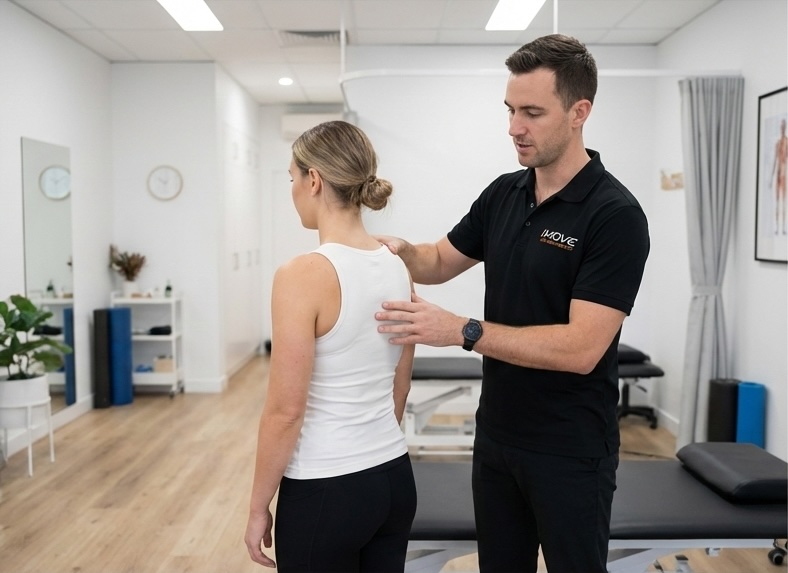
We start every session with a thorough assessment that includes both active movements (watching how you move) and passive examination (hands-on testing). But equally important, we want to understand your experience. When did you lower back pain start? What makes it better or worse? What are you most worried about? What activities do you need to get back to?
Your symptoms and pain levels guide our treatment plan. Everyone’s lower back pain is different, and cookie-cutter solutions rarely work.
Early Stage: Symptom Management
Initially, we focus on reducing your lower back pain and helping you feel more comfortable. This might include:
- Manual therapy techniques to ease muscle tension
- Identifying positions of comfort
- Teaching you specific movements that reduce pain
- Pain education to reduce anxiety
Medium Term: Finding the Root Cause
Once your acute pain settles, we investigate why this happened in the first place. Common contributors can include:
- Movement patterns that overload certain structures
- Weakness in supporting muscle groups
- Posture habits at work or home
- Previous injuries that changed how you move
- Lifestyle factors like stress, sleep, or activity levels
This is where the real, lasting change happens.
Long Term: Building Resilience
The final phase is about making your back stronger and more capable than before. We progressively load your back through targeted exercises, rebuild your confidence, and help you return to all the activities you love without fear.
The Research Behind Early Intervention
The benefits of seeing a physiotherapist early aren’t just clinical observation, they’re backed by solid research. Studies have consistently shown that:
- Patients receiving physiotherapy within 3 days have lower healthcare costs and better outcomes over the following year (Liu et al., 2018)
- Early intervention reduces reliance on opioid medications, imaging, and specialist consultations (Arnold et al., 2019)
- Combining education, manual therapy, and movement training provides faster pain relief and higher patient satisfaction (Romi et al., 2007)
This evidence reinforces what we see in practice every day: the earlier you address acute back pain with proper guidance, the better your outcomes are.
Your Next Steps: Getting Professional Help
If you’re dealing with acute lower back pain right now:
- Start moving gently using the pain-free movements mentioned above
- Try the opposite direction technique based on your pain pattern
- Use heat or ice for comfort
- Book an assessment with us, don’t wait for it to become a lingering issue
Remember, back pain is common, usually not serious, and responds exceptionally well to the right approach. With movement-based recovery and proper guidance, most people return to normal function within weeks.
We’re here to help you navigate this journey from acute pain to full recovery. The human body has a remarkable capacity to heal when given the right environment and guidance.
Your back is stronger than you think, and you don’t have to figure this out alone.
Frequently Asked Questions About Acute Lower Back Pain.
How long does acute lower back pain last?
Acute lower back pain typically improves within 2-6 weeks with appropriate movement and physiotherapy treatment. Early intervention with a physiotherapist can significantly reduce this timeframe.
When should I see a physiotherapist for lower back pain?
See a physiotherapist within the first few days of acute back pain. Early assessment prevents chronic issues and speeds recovery by 40-60% compared to waiting weeks.
What’s the fastest way to relieve lower back pain?
Gentle movement, the opposite direction technique, and professional physiotherapy assessment provide the fastest relief. Avoid prolonged bed rest, which can worsen symptoms.
Can physiotherapy cure my back pain?
Physiotherapy addresses the root causes of back pain through manual therapy, targeted exercises, and movement retraining, leading to long-term resolution in most cases.
Ready to start your recovery? Book an appointment and let’s create your personalised treatment plan. Early intervention means faster recovery.