
Written by Michael Rizk, Co-Founder & Senior Physiotherapist
TL;DR: A physio can confirm whether it’s shin splints or something more serious, then build a plan to settle it down. There’s no set recovery time, it depends how early you act and how carefully you rebuild. For now, cut back to whatever stays pain-free and get it assessed.
- Physio can rule out a stress fracture and finds what’s overloading your shins.
- Recovery time varies widely, there’s no standard rest period.
- Cut back to pain-free activity now and book an assessment early.
Whatever you think is behind your shin pain, a physio assessment is the fastest way to find out what it is and how to treat it.
Shin splints are pain along the shin bone caused by repeated stress from activity. Treatment means cutting back the load that’s aggravating them, then rebuilding gradually with your physio’s guidance.
What Are Shin Splints?
Healthdirect Australia describes shin splints as pain in the lower leg from repeated stress on the shin bone, the tibia. There are two main types.
Medial tibial stress syndrome is the most common, with pain along the inner edge of the shin. Anterior tibial stress syndrome causes pain along the front of the lower leg.
The pain is usually a dull ache that gets worse with activity and eases with rest. The area can also be sore to touch and slightly swollen.
Why Do Shin Splints Happen?
Runners get them, and so do dancers and people who play sports with sudden starts and stops, like netball and basketball. Anyone who suddenly does more impact than their shins are used to can get them.
A sudden increase in the amount or intensity of exercise is a common cause. Hard or uneven surfaces and unsupportive shoes add to the load.
Foot and leg mechanics can play a part too, including flat feet, excessive rolling in of the foot, and weak or tight muscles in the calves, hips or core.
A clinical review of the condition also lists a past history of shin splints, a higher body mass index, reduced ankle movement and limited hip rotation as risk factors, and notes women are affected more often.
If your shin splints started with running, our running physio service can look at your training load and technique.
Is It Shin Splints or Something More Serious?
Most shin pain settles with sensible load changes, but a stress reaction or fracture can look similar at first. The two sit on the same spectrum of bone stress injury.
Shin splints usually cause tenderness along a stretch of the inner shin longer than about 5cm. Pinpoint tenderness on a small spot, under 5cm, points more towards a stress fracture.
Numbness, tingling, burning, or a feeling of tightness during exercise suggests something other than shin splints.
You can’t reliably sort this out at home. A physio can examine your leg and refer you for imaging if it’s needed.
Untreated shin splints can worsen and may lead to a stress fracture, which is another reason not to push through.
What Should You Do First?
Cut back to activity that stays pain-free, and avoid whatever sets the pain off.
We suggest an ice pack for 15 to 20 minutes several times a day, a temporary change of footwear into something that has more cushioning can help as well
If the pain is getting worse, or it hurts during everyday walking, get it checked rather than push on.
How Long Do Shin Splints Take to Heal?
There’s no set answer. A clinical review of the condition states there are no specific recommendations for how long to rest, and the time to get back to full activity varies widely.
It depends on where the pain is, how long you’ve had symptoms, and how severe it is.
If it turns out to be a stress fracture, a return to full activity is widely varied. Some cases see a return to activities around 8-12 weeks, where others have a much longer recovery peroid
Doing too much too soon is the real risk. You are generally at the highest risk of re-injury when you are pain free but the injury has not fully resolved yet. Shin splints can progress to a stress fracture when activity isn’t modified enough.
How Physio Helps
A physio starts with the diagnosis, then works out why your shins got overloaded.
That means looking at how much you’ve been doing and how quickly it changed, your footwear, your foot posture, and the strength and movement of your calves, ankles and hips.
From there you get a plan for how much activity to keep, what to pause, and how to build back up.
A systematic review of 11 trials found the evidence for any single shin splints treatment was too weak to recommend one over another (Winters et al., 2013, Sports Medicine).
That’s why the basics carry so much weight: an accurate diagnosis, sensible load changes, and a gradual return to activity. A clinical review of the condition calls activity modification the cornerstone of management.
One published example of a return-to-running plan asks for a week without bony tenderness and a pain-free 30-minute walk before any running starts. It then builds through short run-walk intervals over about five weeks, adding roughly 10% a week after that until you’re back at your usual level.
That’s an example, not a prescription that can be applied to everyone. Your physio will adjusts the return to exercise timelines to you.
When To See A Physio
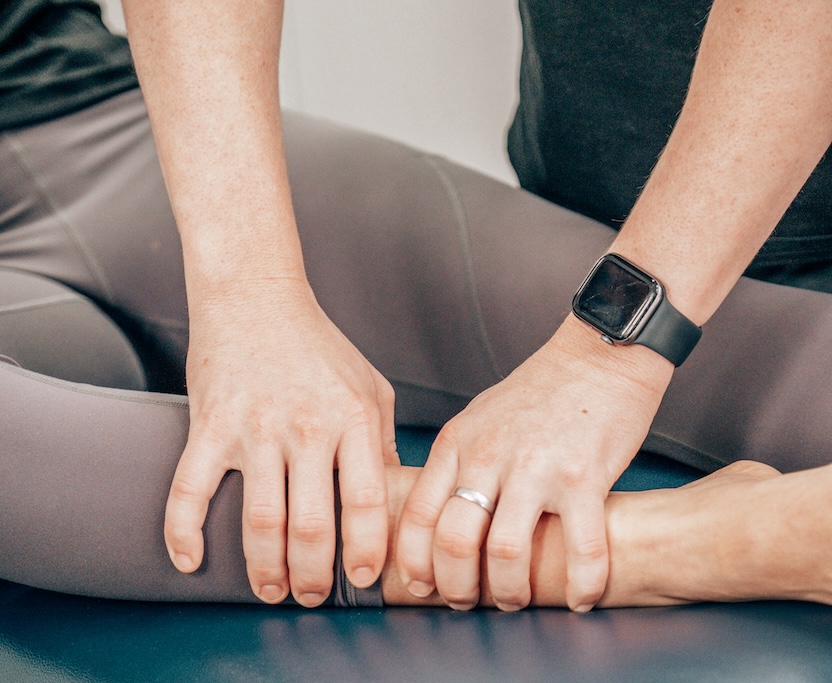
Whether your shins ache a little or hurt a lot, a physio assessment tells you what’s going on, how much you can safely keep doing, and how to stop it coming back.
See one early if the pain is building, it’s stopping you exercising, you’re not sure it’s shin splints, or it keeps returning. Our rehabilitation and sports injury services cover this.
Key Takeaways
- Book a physio now. We can confirm what it is, hopefully rule out a stress fracture, and plan your return to activity.
- Shin splints are pain along the shin bone from repeated stress, most often on the inner edge.
- They come from a sudden jump in impact or exercise, and hard surfaces, unsupportive shoes and leg mechanics can add to it.
- Pinpoint tenderness on a small spot is more typical of a stress fracture, so get it checked.
- There’s no standard recovery time. It varies widely with how long you’ve had it and how you rebuild.
- The evidence for any single treatment is weak, so diagnosis, load management and a gradual return matter most.
If shin pain is holding you back, our physiotherapists can assess it and build a plan around you. Book an appointment online at your nearest iMove Physiotherapy clinic.
FAQ
Can I keep exercising with shin splints?
Cut back to activity that stays pain-free and avoid what sets it off. If your shins hurt during everyday walking, or the pain is building, stop and get it assessed.
How do I know if it’s a stress fracture and not shin splints?
You can’t be sure at home. Shin splints usually cause tenderness along a longer stretch of the shin, while a stress fracture is often pinpoint. X-rays are often normal early on, so a physio should examine the leg and can refer for an MRI if needed.
Do I need a scan?
Not usually. Shin splints are diagnosed from your history and an examination. Imaging is used for cases that persist or worsen, or when a stress fracture is suspected.
Should I stretch my calves?
Healthdirect lists calf and lower leg stretching as a self-care option. The research on it for shin splints specifically is thin, so ask your physio whether it makes sense for you.
Are shin splints only a runner’s problem?
No. Runners and dancers get them often, and so can anyone who suddenly does more impact than they’re used to, like jumping or sports with quick stops and starts.
Will shin splints go away on their own?
With enough rest and activity changes, full recovery is expected. Pushing through can lead to a stress fracture, so it’s better to get it assessed early than wait and see.
iMove Physiotherapy clinics: Rozelle | Panania | Clovelly | Waverley