
Knee osteoarthritis doesn’t have to mean the end of the activities you love. Physiotherapy can reduce pain, improve function, and help you stay active without surgery. Here’s what treatment actually looks like, what the evidence says, and why getting an assessment sooner rather than later makes a real difference.
Physiotherapy is one of the most effective treatments available for knee osteoarthritis. Through targeted exercise, hands-on therapy, and education, a structured physio program can significantly reduce pain, improve strength and movement, and get you back to the things you enjoy. Whether that’s walking the dog, keeping up with your grandkids, or playing competitive sport well into your 40s and beyond.
“You’ll Just Have to Live With It”
One of the most common things we hear from patients coming in with knee osteoarthritis is that they’ve been told there’s nothing that can be done. It’s one of the most discouraging things to hear, and in most cases, it’s simply not the full picture.
Osteoarthritis of the knee is a degenerative joint condition where the cartilage cushioning the joint gradually breaks down over time. It causes pain, stiffness, swelling, and for many people, a slow erosion of the activities they love. It’s extremely common and becomes more prevalent with age.
But “it’s wear and tear, nothing you can do” is outdated thinking. The clinical evidence tells a very different story and we see it play out in our clinics every day.
What Physiotherapy Actually Does for Knee OA
Physio for knee osteoarthritis isn’t about passive treatment and sending you on your way. A well-structured plan addresses the underlying drivers of your pain and builds long-term resilience in the joint.
Exercise therapy
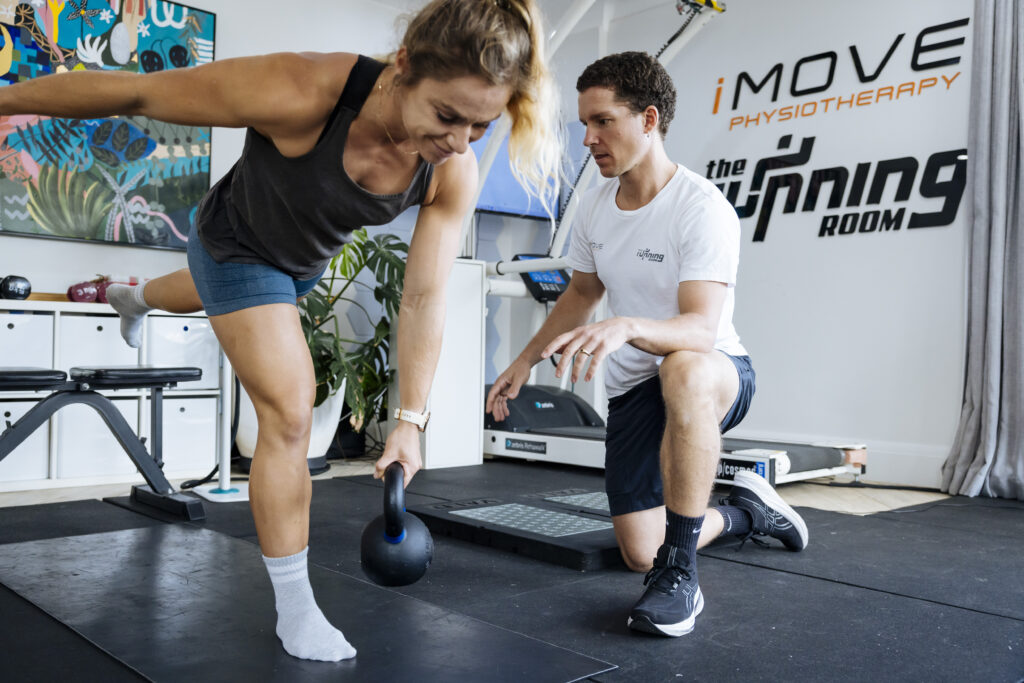
This is the cornerstone of OA management. Targeted strengthening exercises reduce load through the knee joint, improve function, and decrease pain over time. These exercises are specific to you: your strength, your movement patterns, and your goals.
Contrary to what many people fear, appropriate exercise doesn’t accelerate joint damage. Done correctly, it’s one of the most powerful tools available for managing knee OA.
Manual therapy
Hands-on treatment plays an important role in managing pain and improving mobility, particularly during flare-ups or in the early stages of a program. Manual therapy helps restore movement in and around the joint, while techniques such as dry needling can address muscle tension and pain referral patterns that compound the problem. These approaches work alongside exercise, not instead of it.
Education and self-management
Understanding your condition is genuinely powerful. When patients understand what OA is, what’s actually happening in the joint, and what they can actively do about it, outcomes improve. We spend real time helping patients understand their pain, how to pace activity, what to modify, and how to build habits that last.
What About Surgery?
Surgery, including total knee replacement, can be life-changing for the right patient at the right time. But it should always be the last resort, not the first response.
Recent studies have shown that for most people with knee OA, non-surgical treatment is effective for pain relief and improved function. That’s not to say surgery is never the answer, because sometimes it is. But many patients who arrive at our clinics believing a knee replacement is inevitable find that a structured physio program gives them a quality of life they didn’t think was possible.
Our approach is always to exhaust conservative management first. Physio won’t reverse the structural changes in the joint but there is a great deal we can do to reduce pain, improve function, and slow the progression.
What to Expect at Your First Appointment
If you come in to see one of our physios for knee OA, your first appointment covers three things.
First, we get a clear picture of how the condition is affecting your daily life, what you can and can’t do, what your goals are, and what’s been tried before. Second, we complete a thorough physical assessment and testing to understand the specific nature of your presentation. No two knee OA cases are identical. Third, we build a long-term treatment plan around you and your OA, not a generic protocol.
You leave with clarity about where you’re at, and a concrete path forward.
Key Takeaways
- Knee osteoarthritis is common and manageable. The idea that you simply have to accept the pain and stop doing what you love is not the full picture.
- Physiotherapy, including targeted exercise, manual therapy, dry needling, and self-management education, is a proven first-line approach to managing knee OA.
- Surgery should be a last resort. For most people, non-surgical treatment is effective for both pain relief and function.
- A good physio program is built around your specific goals and lifestyle, not a one-size-fits-all approach.
- Getting an early assessment means more options, a better understanding of your condition, and a clearer path forward.
Ready to take the next step? Our physios across Sydney work with knee OA patients every day.
Book an assessment here and let’s build a plan that works for you.
Frequently Asked Questions
Is physiotherapy suitable for all stages of knee osteoarthritis? Yes. Physio is beneficial across all stages of knee OA, from early symptoms through to more advanced presentations. The approach will differ depending on severity, your goals, and your overall health. This is why a proper assessment is always the starting point.
Will exercise make my knee OA worse? This is one of the most common concerns we hear. The evidence is clear: appropriate exercise does not accelerate joint damage. Strengthening the muscles around the knee reduces load through the joint and can significantly reduce pain and improve function over time.
How long does it take to see results? It varies person to person, but most patients begin noticing some improvement within a few weeks of consistent treatment. Longer-term gains in strength and function build over months. Staying consistent with your program is key.
Do I need a GP referral to see a physio for knee OA? No. In Australia, you can book directly with a physiotherapist without a referral. If you have a chronic disease management plan through your GP, you may be eligible for Medicare-rebated sessions.
What’s the difference between osteoarthritis and rheumatoid arthritis? They’re both joint conditions, but they have very different causes. Osteoarthritis is a degenerative condition where the cartilage in the joint gradually wears down over time, typically due to age, load, or previous injury. Rheumatoid arthritis (RA), on the other hand, is an autoimmune disease where the immune system mistakenly attacks the lining of the joints, causing inflammation. RA can affect people of any age and often presents in multiple joints symmetrically (for example, both hands at once), whereas OA tends to develop in specific joints that have been subjected to more wear and load. Both conditions can benefit from physiotherapy, but the treatment approach differs, which is why a proper assessment and, where relevant, a confirmed diagnosis from your GP or specialist, is important before starting a program.
Is knee replacement the only option if physio doesn’t work? Not necessarily. Depending on your situation, there may be other non-surgical options to explore before surgery is considered. Your physio and GP can guide that conversation together.


